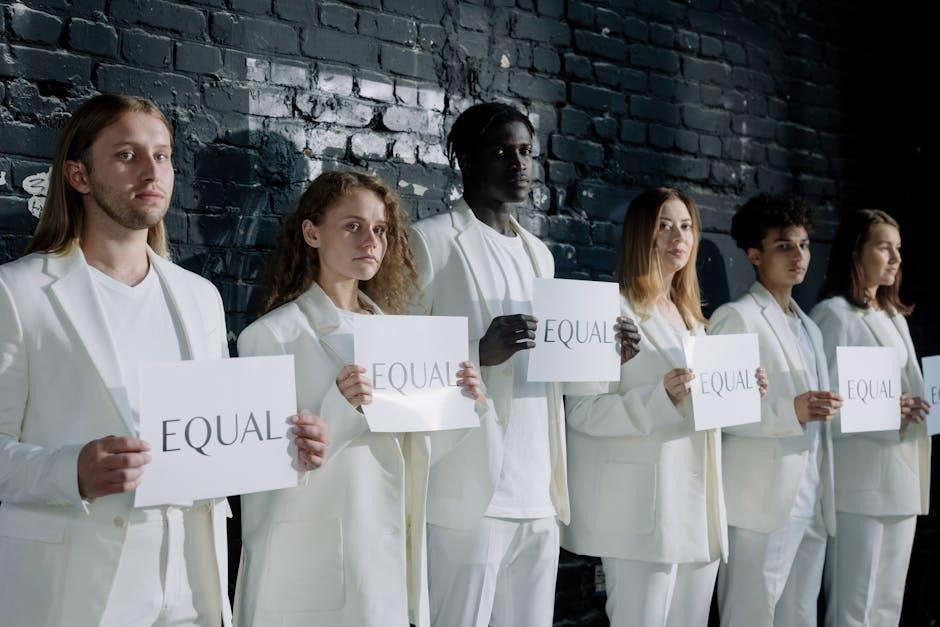
Barry’s work critically examines egalitarian justice, challenging popular responses to cultural diversity within Western nations, and advocating for a nuanced, agnostic approach to equality․
Context of the Debate
The core of the debate centers on how public policy should navigate diverse religious beliefs, customary practices, and differing conceptions of the good life prevalent in modern Western societies․ Brian Barry’s 2002 work offers a robust liberal-egalitarian critique of multiculturalism, questioning the prevailing approaches․ Simultaneously, discussions extend to the scope of egalitarian justice – should it be confined domestically or expanded globally? This expansion faces challenges, even from those advocating for domestic equality, prompting a re-evaluation of basic equality concepts․
The Core Argument of the PDF
The document fundamentally argues for shifting the equality debate away from specific definitions of “basic equality” towards a more neutral, agnostic stance․ It critiques the current discourse, suggesting a refocusing is necessary for productive discussion․ Furthermore, it analyzes Marx’s critique of liberal ideals – freedom and equality – demonstrating their compatibility with existing capitalist social relations․ Barry’s work presents a liberal-egalitarian perspective, challenging multiculturalism and emphasizing social justice within equality debates․

Historical Foundations of Equality Concepts
Aristotle’s concept of formal equality – treating equals equally, and unequals unequally – provides a foundational perspective explored within the broader historical context․
Aristotle’s View on Formal Equality
Aristotle’s foundational principle of formal equality, as referenced in the document, dictates that individuals should receive equal treatment only when they are, in fact, equal․ Conversely, those possessing inequalities should be treated accordingly – a concept of proportional equality․ This isn’t a blanket endorsement of sameness, but rather a justification for differentiated treatment based on relevant distinctions․ The text highlights this as a starting point for understanding subsequent critiques and elaborations on equality concepts, setting a historical stage for later philosophical challenges, like those posed by Marx․
Marx’s Critique of Liberal Equality
Marx’s analysis, as presented within the document, fundamentally challenges liberal notions of freedom and equality․ He argues these ideals aren’t neutral principles, but are deeply embedded within – and supportive of – the social relations inherent in capitalism․ Liberal equality, therefore, doesn’t dismantle existing power structures; it legitimizes them․ This critique suggests that focusing solely on formal equality overlooks the material conditions that create and perpetuate inequality, revealing a systemic flaw in liberal thought․
Dimensions of Equality Explored in the PDF
The PDF explores how religious beliefs, customary practices, and differing lifestyles intersect with equality, prompting questions about appropriate public policy responses to diversity․
Religious Beliefs and Equality
Barry’s analysis delves into the complexities arising when diverse religious beliefs encounter the demands of egalitarian justice within a shared political space․ The document highlights that Western countries inherently contain groups with differing religious convictions, necessitating careful consideration of how public policy should navigate these differences․ It implicitly questions whether complete accommodation of all religious practices is compatible with a commitment to fundamental egalitarian principles, suggesting a need for critical evaluation rather than automatic acceptance․
Customary Practices and Equality
The text acknowledges that Western nations encompass groups adhering to varied customary practices, posing challenges to egalitarian ideals․ Barry’s work prompts examination of whether all customary practices deserve equal respect or protection under public policy․ It suggests a critical assessment is needed, questioning if certain customs might conflict with core egalitarian principles, like gender equality or individual liberty․ The document implies a nuanced approach, avoiding blanket acceptance or rejection of diverse customs․
Ideas About the Right Way to Live and Equality
Barry’s analysis extends to differing conceptions of the “right way to live,” recognizing that diverse groups hold distinct values and beliefs․ This raises fundamental questions about the limits of tolerance and the role of public policy in navigating these differences․ The document suggests that a simple endorsement of all lifestyles isn’t feasible within an egalitarian framework, necessitating careful consideration of potential conflicts with universal principles․
Challenges to Egalitarian Justice
The text highlights debates surrounding domestic versus global egalitarianism, and presents a five-point critique of basic equality concepts, urging a more agnostic approach․
Domestic Egalitarianism vs․ Global Egalitarianism
Many theorists champion extending egalitarian justice globally, yet this faces criticism, even from those prioritizing equality within nations․ The document focuses on challenges posed by domestic egalitarians to this global view․ It questions the intuitive appeal of universally applying egalitarian principles, suggesting complexities arise when scaling justice beyond national borders․ This critique necessitates a re-evaluation of how we conceptualize and implement equality across differing societal contexts, prompting deeper consideration of feasibility and practical implications․
Critiques of Basic Equality Concepts
The paper delivers a focused, five-point critique of the current debate surrounding fundamental equality․ It argues for shifting the discussion away from specific definitions of “basic equality” towards a more open-minded, agnostic stance․ This suggests existing debates are often hampered by rigid adherence to particular conceptions, hindering progress․ Refocusing allows for broader exploration of egalitarian principles, acknowledging the inherent complexities and nuances within the pursuit of a just and equitable society․
Methodological Approaches to Measuring Equality
The European Institute for Gender Equality’s (EIGE) Gender Equality Index serves as a comprehensive tool for evaluating and quantifying gender equality across nations․
The Gender Equality Index (EIGE)
This index represents a robust methodology for assessing gender equality, moving beyond simplistic comparisons․ It meticulously reviews various dimensions, offering a nuanced understanding of progress and persistent inequalities․ The EIGE index clarifies concepts and normative issues related to distributive principles, particularly those centered around need․ By employing a comprehensive framework, it allows for detailed analysis and informed policy recommendations, contributing to a more equitable society․ It’s a vital tool for researchers and policymakers alike, fostering evidence-based approaches to gender equality initiatives․
Principles of Need and Equality
The document highlights crucial distinctions between the concepts of need and equality, clarifying their individual meanings and interconnectedness․ It delves into the normative issues inherent in proposing distributive principles focused on these concepts․ Understanding these nuances is vital for crafting just and effective policies․ The analysis emphasizes that a focus solely on equality can overlook genuine need, while neglecting equality can perpetuate existing disadvantages, demanding a balanced approach․
Liberal-Egalitarian Perspectives on Multiculturalism
Barry’s book presents a liberal-egalitarian critique of multiculturalism, offering a focused examination of this subject instead of a broader treatise on social justice․
Barry’s Critique of Multiculturalism
Brian Barry challenges the prevalent acceptance of multiculturalism, questioning how public policy should address diverse religious beliefs, customary practices, and differing lifestyles within Western societies․ He doesn’t simply accept the notion that all cultural practices deserve equal respect or accommodation․
Instead, Barry develops a robust restatement of egalitarian principles, suggesting a more critical evaluation of cultural claims․ His work implies that certain cultural practices might be incompatible with fundamental egalitarian values, requiring careful consideration and potentially, limitations on their public expression or support․
The Role of Social Justice in Equality Debates
The document positions social justice as central to contemporary equality debates, particularly when considering the extension of egalitarian principles beyond national borders․ Many theorists advocate for global egalitarianism, but this faces critique, even from those committed to domestic social justice․
Barry’s work suggests a refocusing of the debate, moving away from specific conceptions of equality towards a more agnostic proposition, emphasizing the importance of a robust framework for evaluating claims of injustice․

Reframing the Equality Debate
The text advocates shifting the focus from specific equality concepts to a more agnostic approach, prompting a re-evaluation of the core debate itself․
Moving Beyond Specific Concepts of Equality
The document proposes a critical move away from fixating on particular definitions of “basic equality․” Instead, it champions a more flexible and open-minded stance – an “agnostic proposition” – regarding equality itself․ This reframing aims to revitalize the discussion, steering it clear of unproductive debates centered on rigid interpretations․ By adopting this approach, the analysis encourages a broader consideration of justice and fairness, unconstrained by pre-defined notions of what equality must entail, fostering a more productive and nuanced exploration of the subject․
An Agnostic Approach to Equality
This perspective suggests a deliberate distancing from prescriptive definitions of equality, advocating instead for a more open and investigatory stance․ It doesn’t deny the importance of equality, but rather questions the utility of prematurely settling on a single, definitive concept․ This “agnosticism” allows for a more thorough examination of the complexities inherent in achieving justice, acknowledging that the most appropriate form of equality may vary depending on context and circumstance, promoting adaptable solutions․

The Compatibility of Equality and Capital
Marx’s analysis in Capital reveals that liberal ideals, including freedom and equality, are not opposed to, but are actually embedded within, capitalist social relations․
Marx’s Argument on Freedom and Equality
Marx, through his critique in Capital, posits that concepts of freedom and equality, central to liberal thought, aren’t abstract ideals existing outside of material conditions․ Instead, he argues they are fundamentally shaped by, and ultimately compatible with, the social relations inherent in capitalism․
This isn’t to say capitalism delivers true freedom or equality, but rather that the very language of these ideals functions within, and reinforces, the existing power structures and economic arrangements of a capitalist society․ He demonstrates how these ideals are inextricably linked to the system itself, rather than being oppositional forces․
Social Relations of Capital and Liberal Ideals
Marx’s analysis reveals how liberal ideals – like freedom and equality – aren’t neutral principles, but are deeply embedded within the “social relations of capital․” These relations, characterized by wage labor and the pursuit of profit, shape the very understanding and application of these ideals․
Essentially, the framework of capitalism subtly defines what “freedom” and “equality” mean within that system, often serving to legitimize existing inequalities rather than challenge them․ This connection highlights a critical tension between stated ideals and material reality․
Distributive Principles and Equality
The document emphasizes clarifying distributive principles, particularly those focused on need, and distinguishing them to better understand normative issues within equality debates․
Normative Issues in Distributive Justice
The core of the debate revolves around establishing just distribution principles, moving beyond simplistic notions of equality․ Examining principles centered on need necessitates careful consideration of what constitutes legitimate need and how it should be assessed fairly․ This involves grappling with complex ethical questions regarding resource allocation and societal obligations․
Furthermore, the document highlights the importance of clarifying these concepts to avoid ambiguity and ensure a robust foundation for egalitarian arguments, ultimately impacting policy decisions․
Focusing on Need-Based Distribution
The text emphasizes a shift towards distributive principles prioritizing need, demanding a clear definition of “need” itself․ This approach necessitates distinguishing genuine needs from mere wants, a challenging normative task․ It requires evaluating the justification for prioritizing needs over other distributive criteria, like merit or equality of outcome․
Consequently, a focus on need compels a deeper examination of the ethical implications and practical challenges inherent in implementing such a system of resource allocation․

Formal vs․ Substantive Equality
Aristotle’s concept of formal equality—treating equals equally, and unequals unequally—forms a foundational element, prompting consideration of just application in diverse contexts․
Treating Equals Equally
The principle of treating equals equally, central to Aristotle’s formal equality, necessitates careful definition of “equality” itself․ Barry’s critique pushes beyond simplistic applications, questioning whether shared characteristics automatically justify identical treatment․ This approach acknowledges that seemingly neutral policies can perpetuate existing inequalities if underlying social conditions are ignored․
Furthermore, the document suggests a move away from fixating on specific conceptions of basic equality, advocating for a more agnostic stance․ This implies that determining who qualifies as “equal” requires ongoing critical assessment, rather than rigid categorization․
Treating Unequals Unequally
Acknowledging inherent differences, the principle of treating unequals unequally, as initially proposed by Aristotle, doesn’t inherently oppose equality․ Instead, it suggests tailoring policies to address specific needs and disadvantages․ Barry’s work, however, cautions against using this principle to justify existing power imbalances or reinforce societal hierarchies․
The document emphasizes the importance of critically evaluating the justifications for differential treatment, ensuring they genuinely promote justice rather than perpetuate inequality, particularly within multicultural contexts․

Contemporary Relevance of the PDF’s Arguments
Barry’s critique of multiculturalism remains vital, prompting ongoing debates about diversity, public policy, and the complexities of achieving egalitarian justice in modern Western societies․
Equality in Western Countries Today
Western nations grapple with diverse religious beliefs, customary practices, and lifestyles, demanding policy responses that navigate equality concerns․ Barry’s work provides a framework for analyzing these challenges, questioning simplistic notions of egalitarianism․ The debate extends from domestic to global spheres, facing critiques from various perspectives․ Contemporary discussions center on reframing equality beyond specific concepts, adopting a more agnostic approach․ This involves critically examining the compatibility of equality with existing capitalist structures and considering need-based distributive principles, acknowledging the inherent complexities of achieving true equality․
Diversity and Public Policy Responses
Public policy faces the complex task of responding to cultural diversity – religious beliefs, customs, and differing lifestyles – within Western countries․ Barry’s liberal-egalitarian critique of multiculturalism offers a valuable lens for evaluating these responses․ The core argument challenges conventional wisdom, advocating for a restatement of egalitarian principles․ Effective policies require moving beyond simply acknowledging diversity to actively addressing inequalities, while remaining mindful of the tensions between equality and existing social structures․

The Ongoing Debate on Equality
Egalitarianism in the 21st century continues to face challenges, demanding ongoing research into distributive justice and the complexities of achieving true equality․
Challenges to Egalitarianism in the 21st Century
Contemporary challenges to egalitarianism stem from debates surrounding global versus domestic justice, with critiques questioning the extension of egalitarian principles across borders․ The core argument centers on refocusing the debate, moving away from specific concepts of equality towards a more agnostic proposition․ This shift acknowledges the inherent complexities and diverse interpretations of equality itself․ Furthermore, the compatibility of equality with existing capitalist structures remains a significant point of contention, as highlighted by Marx’s critique of liberal ideals and their grounding in capital relations․
Future Directions for Equality Research
Further research should prioritize deconstructing the notion of equality, acknowledging its multifaceted nature and moving beyond rigid definitions․ Investigating the interplay between distributive principles – particularly need-based approaches – and existing social structures is crucial․ Examining the methodological challenges in measuring equality, like refining indices such as the EIGE Gender Equality Index, will also be vital․ Ultimately, a continued agnostic approach, coupled with critical analysis of capital’s influence, promises more insightful explorations․
The document reveals equality as a complex illusion, demanding a shift from specific concepts toward a more agnostic, critical understanding of its limitations․
Recap of Key Arguments
The core of Barry’s analysis centers on a liberal-egalitarian critique of multiculturalism, questioning the automatic acceptance of diverse beliefs and practices․ He urges a move beyond fixated concepts of “basic equality,” advocating instead for a more flexible, agnostic stance․
Furthermore, the text highlights tensions between domestic and global egalitarianism, and dissects Marx’s argument that liberal ideals like freedom and equality are intertwined with capitalist social relations․ The document also reviews the Gender Equality Index (EIGE) methodology, emphasizing distinctions regarding need-based distribution․
The Complexity of Achieving True Equality
Achieving genuine equality proves remarkably complex, as the document reveals through critiques of both multiculturalism and established egalitarian frameworks․ Barry’s work suggests that simply acknowledging diverse religious beliefs, customary practices, or lifestyles isn’t sufficient for justice․
The text underscores the inherent challenges in balancing domestic and global egalitarian concerns, alongside the deep-rooted connection between liberal ideals and the social relations of capital, complicating any straightforward path towards true equality․